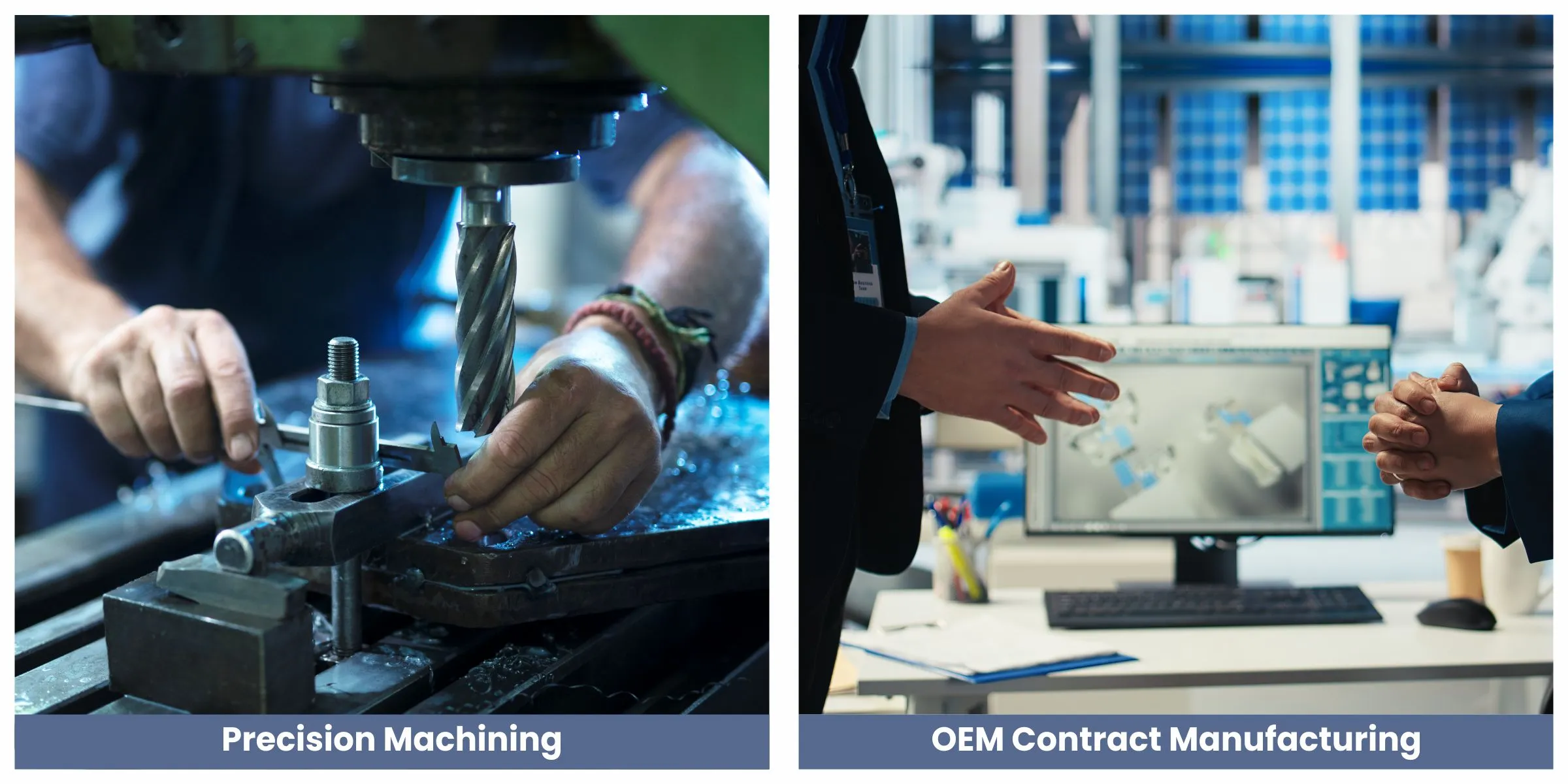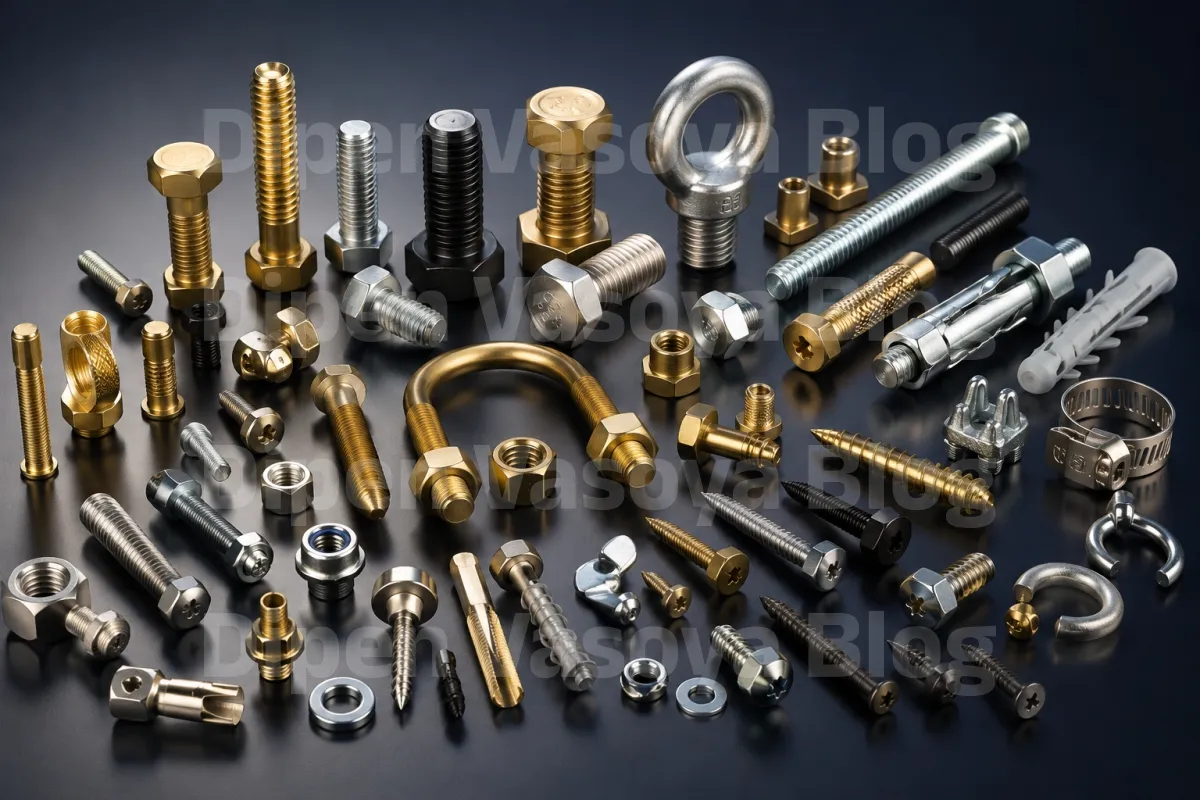
Introduction
Every machine, structure, and industrial product depends on reliable connections to ensure strength, safety, and long-term performance. Fasteners are among the most essential mechanical components used to join two or more parts securely, allowing products and structures to withstand operational loads, vibration, and environmental conditions. From household furniture to aircraft and heavy industrial equipment, fasteners provide the stability required for dependable performance. Understanding the different types of fasteners and bolts helps engineers, manufacturers, and procurement professionals choose the right solution for each application.
What Is a Fastener?
A Fasteners is a mechanical device designed to join or secure two or more components together. Unlike permanent joining methods such as welding or riveting, many mechanical fasteners allow assemblies to be disassembled for maintenance, repair, or replacement.
Fasteners are manufactured from various materials, including carbon steel, stainless steel, brass, aluminum, and alloy steel. Material selection depends on factors such as mechanical strength, corrosion resistance, electrical conductivity, and environmental exposure.
In modern manufacturing, Industrial Fasteners play a critical role in maintaining structural integrity, simplifying assembly processes, and supporting quality control across numerous industries.
What Is a Bolt?
A Bolt is a threaded fastener that works with a matching nut to clamp components together. During installation, the bolt passes through aligned holes while the nut applies clamping force, creating a secure mechanical joint. Although bolts and screws appear similar, they serve different purposes. Bolts generally require a nut and are installed through pre-drilled holes, whereas screws typically create their own threads or engage directly with threaded materials without requiring a separate nut.
Types of Bolts
Different applications require different Types of Bolts, each designed for specific mechanical requirements.
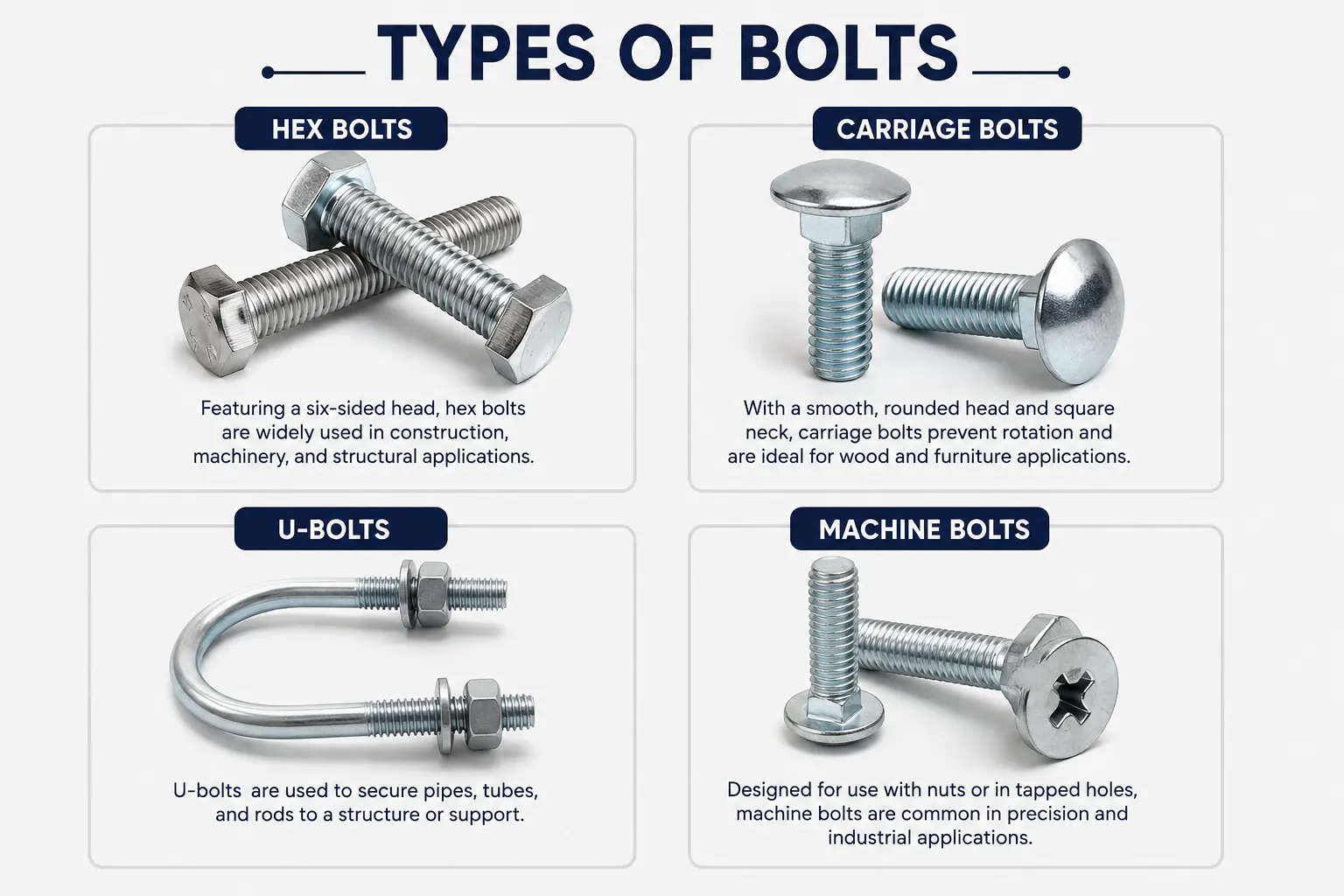
Carriage Bolt – Designed with a smooth rounded head and square neck to prevent rotation during tightening, making it suitable for wood and furniture assemblies.
Eye Bolt – Features a looped head used for lifting, rigging, and securing heavy loads.
U-Bolt – Shaped like the letter "U" and commonly used for clamping pipes, tubes, and structural supports.
Anchor Bolt – Used to secure structural elements to concrete foundations in construction projects.
Flange Bolt – Includes an integrated flange that distributes load evenly while reducing the need for separate washers.
Socket Head Bolt – Installed using a hex key, making it ideal where limited installation space is available.
Lag Bolt – A heavy duty threaded fastener designed primarily for timber, wooden structures, and heavy construction.
T-Head Bolt – Fits into machine table slots and is widely used in industrial tooling and CNC equipment.
Machine Bolt – Commonly used in machinery and equipment assemblies requiring accurate alignment and secure fastening.
Applications of Bolts
Bolts serve a wide range of industries because of their strength, reliability, and ease of maintenance. They are extensively used in construction for steel frameworks and bridges, in automotive manufacturing for engines and suspension systems, and in aerospace where lightweight, high-strength Engineering Fasteners are essential.
Marine equipment depends on corrosion-resistant Mechanical Fasteners to withstand harsh saltwater environments. Oil and gas facilities require heavy-duty bolts capable of handling high pressure and demanding operating conditions. Heavy machinery manufacturers rely on precision fastening systems for durability under continuous mechanical stress.
Electrical equipment, industrial control panels, furniture manufacturing, and renewable energy installations such as wind turbines and solar mounting systems also depend on properly selected Bolt Applications to ensure safe, reliable operation.
An example of industry participation can be seen through Mayank Brass, whose publicly available manufacturing information reflects the broader use of precision-engineered Brass Fasteners within industrial fastening applications.
Conclusion
Fasteners are fundamental components that influence the safety, durability, and performance of virtually every engineered product. Understanding different bolt designs, materials, and applications enables engineers and buyers to make informed decisions for reliable assemblies. Whether used in construction, transportation, manufacturing, or renewable energy, selecting appropriate Fastener Components and high-quality Industrial Fasteners ensures consistent performance, easier maintenance, and long-term structural integrity.
Frequently Asked Questions
What are fasteners used for?
Fasteners are used to securely join two or more components in mechanical, structural, electrical, and industrial assemblies while allowing maintenance or replacement when required.
Which material is best for industrial fasteners?
The ideal material depends on the application. Carbon steel provides high strength, stainless steel offers corrosion resistance, brass is suitable for electrical and marine uses, and alloy steel supports heavy-duty industrial applications.
How do I choose the correct bolt?
Consider load capacity, material, corrosion resistance, thread type, head style, operating environment, and applicable engineering standards before selecting a bolt.
Which industries use industrial fasteners?
Industrial fasteners are widely used in construction, automotive, aerospace, marine, oil and gas, heavy machinery, electrical equipment, furniture manufacturing, and renewable energy systems.
 Dipen Vasoya